When one thinks of Llanes as a holiday destination, it immediately visualizes its More than thirty beaches, its great cliffs, its green meadows and that coastal landscape that invites you to relax outdoorsSun, sand, beach bars, and sea are part of its charm. However, the municipality offers much more than a beach getaway. churches and hermitages of Llanes are a a different way to discover its history, its architecture and its deepest identity.
Llanes is also tradition, maritime memory, Indian legacy, popular legends and cultural heritageAmong its peoples, historic neighborhoods and rural parishes Hidden within these churches and hermitages are temples that speak of the lives of those who inhabited this land for centuries. Therefore, exploring the churches and hermitages of Llanes allows one to view the municipality from a more leisurely, cultural perspective, deeply connected to its roots.
For those looking What to see in Llanes Beyond its beaches, this route through the churches and hermitages of Llanes is a perfect suggestion. 28 parishes appear churches, monasteries, small chapels y shrines linked to sailors, pilgrims, emigrants returning from the Americas, festive groups, and old local families.
Entering many of these hermitages in Llanes is like stepping into the past. They hold more than just prayers: they safeguard legends, symbols, festivals, local pride, and a vernacular architecture that refuses to disappear. Below, we propose a tour of some of the most unique churches and hermitages in Llanes, revealing their secrets, key dates, and nearby places to complete your visit.
Church of Our Lady of Sorrows, in Niembro
There are images that are etched in our retinas forever, and that of the Church of Our Lady of Sorrows, in Niembro, is one of them. Located in the El Vau cove, next to the estuary, this neoclassical jewel consecrated in 1804 It is one of the most photographed churches in Asturias and an essential stop on any route through the churches and hermitages of Llanes.
Its unique character is closely linked to the landscape. When the tide rises, the estuary floods the area around the church and its adjoining cemetery, creating an almost perfect reflection on the water. The sensation is that of seeing a church floating on the estuary, an image that has made this spot one of the most iconic places in the municipality.
It's not surprising that this image has appeared in films like The Grandfather y Epílogoand in television series such as MrsThe church of Niembro is part of the religious heritage of Llanes, which has also become a cinematic landscape.
Behind its facade also lies the effort of the IndiansThose emigrants from Llanes who made their fortune in America and who, upon returning, financed its construction as a sign of gratitude to their homeland.
- Key date: el September 15 The feast of Our Lady of Sorrows is celebrated with a solemn mass and procession.
- What to see around: You can stroll through the rural villages of Niembro y Clay, approach the Toranda Beach or contemplate one of the best views of the Torimbia beach.
Monastery of San Antolín de Bedón, in Naves
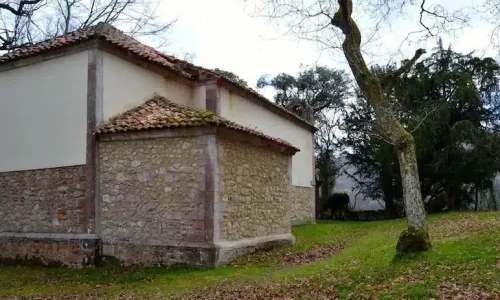
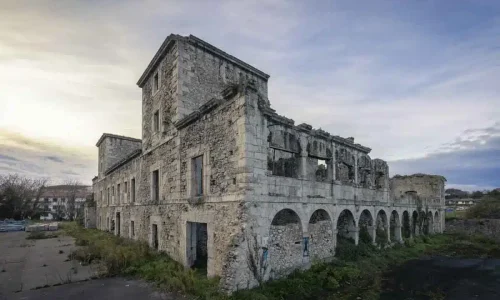
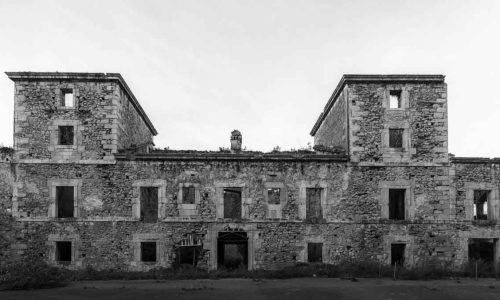
Hidden among the native vegetation, just a few meters from San Antolín beach, stands one of the most mysterious temples in the municipality. Monastery of San Antolín de Bedón It is an ancient medieval complex that, although it remains closed to the public today for conservation reasons, is still a fundamental stop to understand the churches and hermitages of Llanes.
This temple of the thirteenth centuryBuilt upon even older previous structures, it shows the architectural transition from Romanesque to cistercian gothicIts ruins, surrounded by greenery and close to the sea, convey that mixture of beauty and abandonment that so fascinates those who seek places with history.
The monastery is also shrouded in legend. Local tradition says that its construction was related to the repentance of the Count Don MunioAccording to the story, the nobleman, blinded by rage after being rejected by a beautiful shepherdess, killed her with arrows and, consumed by remorse, decided to donate his lands and riches to build this temple as a path to spiritual redemption.
Beyond the legend, San Antolín de Bedón reminds us that Llanes' religious heritage possesses not only architectural value but also immense narrative power. It is one of those places where history, oral tradition, and landscape seem to form part of a single scene.
What to see around: the immense beach of San Antolin, highly appreciated by surf lovers, and the inland beach of gulpiyuri, declared a natural monument.
Hermitage of San Antonio, in Nueva de Llanes
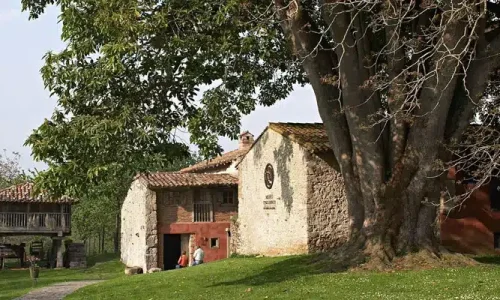
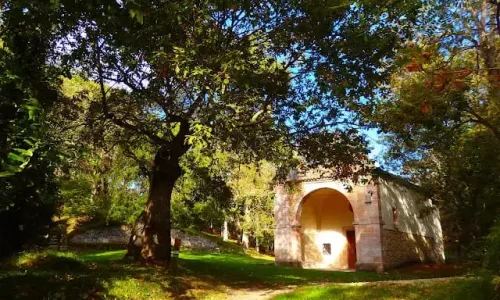
Hidden within the parish of Nueva is a neo-Gothic hermitage that stands out for its unique aristocratic and scientific character. Surrounded by meadows and centuries-old trees, the Hermitage of San Antonio It was ordered to be built by the Counts of the Vega del Sella to serve as a family mausoleum. All the information about the chapel here.
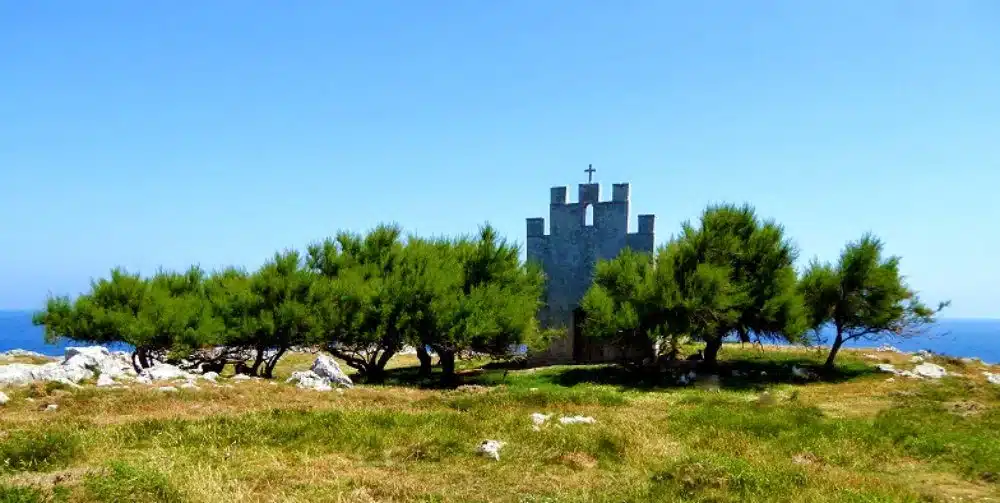
Its surroundings alone invite you to pause, but the most fascinating fact lies within its history. Within its walls rests Ricardo Duque de Estrada, Count of Vega del Sella, one of the most influential archaeologists and prehistorians in Europe at the beginning of the 20th century.
He was responsible for the discovery and study of important prehistoric caves in the eastern region of Asturias, which makes this hermitage a particularly interesting place for those seeking to combine religious heritage, local history and scientific culture.
Within a route through the churches and hermitages of Llanes, this stop allows you to discover a lesser-known part of the council: that linked to the great families, the palaces, the archaeological research and the cultural footprint of those who promoted projects linked to the territory.
- Key date: el 13 June, during the San Antonio de Nueva festivities.
- What to see around: the town of New from Llanes, known for its palaces and examples of Indiano architecture, and the spectacular beach of Sea Caves.
Chapel of Saint Anne, in Llanes
Located in the heart of the town's historic center, the Chapel of Santa Ana It represents the seafaring heart of Llanes. This small building of the XV century For centuries it was a space deeply linked to ancient times Brotherhood of SeafarersThe Llanes fishermen's guild. All the information about the hermitage here.
Although she is popularly known today as Saint Anne, she also shared devotion with San Telmo y Saint Nicholas of Myra, original patrons of the seafaring men. This connection with sailors makes this chapel one of the most moving pieces of Llanes' religious heritage.
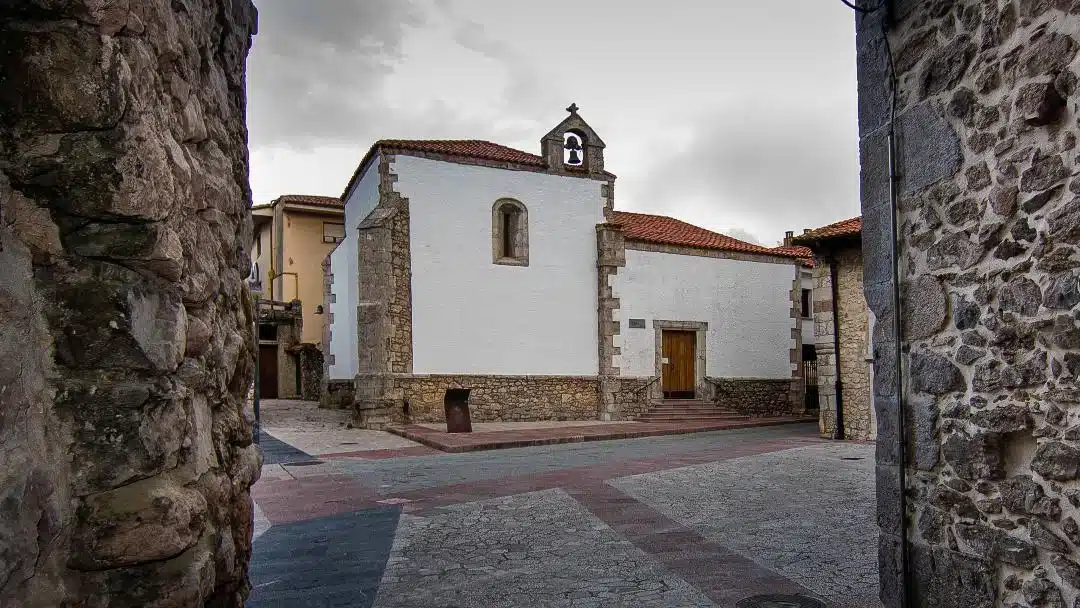
Its importance has gained even more symbolic value due to its connection with the Fishermen's Guild of Santa Ana, a much-loved institution in the town. This corner speaks of the port, the trade, generations of fishermen, and a maritime identity that remains very much alive in Llanes.
If you're looking for things to see in Llanes beyond the beaches, the Chapel of Santa Ana is an easy, centrally located stop steeped in history. Its surroundings also provide easy access to other must-see spots in the historic center.
Key date: In December, the Brotherhood celebrates the traditional festival inside its premises. A Sea of Christmas Carols, a particularly emotional event.
What to see around: The square where it is located is flanked by the Gastañaga PalaceBuilt between the 14th and 15th centuries. From here you can explore the historic center, the port and the El Sablón beach.
Basilica of Santa María del Conceyu, in Llanes
Also in the heart of the town is the main temple of the council: the Basilica of Santa María del ConceyuIt is the place where the major official masses are celebrated and one of the churches with the greatest historical value among the churches and chapels of Llanes.
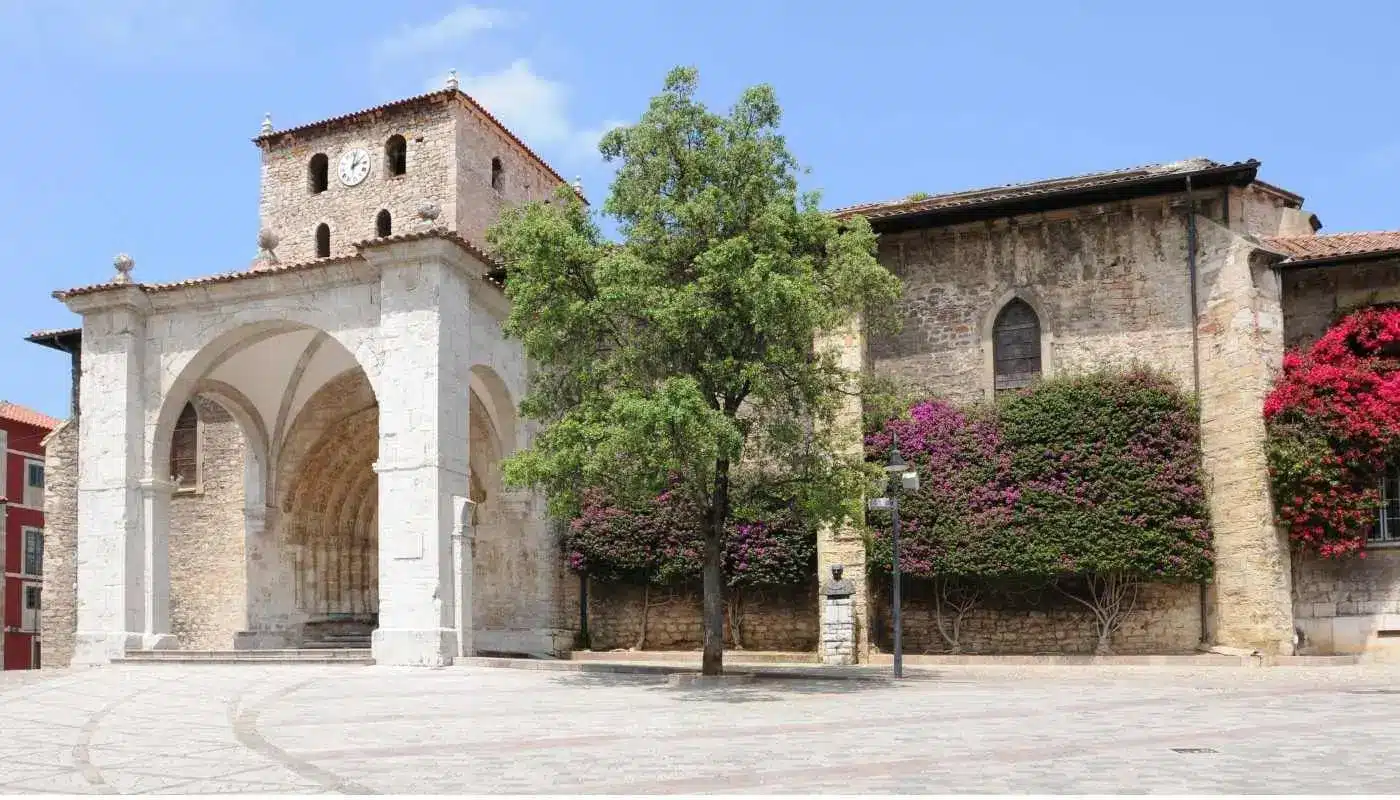
Its construction began in the year 1240 and constitutes a magnificent example of Gothic architectureInside, its features are particularly striking. wide ribbed vaults, of Romanesque tradition, and the imposing altarpiece of the main altar.
Its great uniqueness lies in the origin of its funding. Unlike most medieval churches, which were usually financed by the monarchy or the high nobility, this church was paid for by “the council”In other words, they were the The residents themselves were the ones who promoted the works to demonstrate the economic power and independence of the town of Llanes against the feudal lords.
Therefore, the Basilica of Santa María del Conceyu It's not just a religious building. It's also a a symbol of collective pride and a must-see for those who want to understand the historical weight of Llanes in the Middle Ages.
- What to see around: la House of Culture, Llanes Casino and the main streets of the center, where you will find bars, terraces and a good atmosphere to complete the visit.
The chapels of Los Bandos: La Guía, La Magdalena and San Roque
One cannot speak of the chapels of Llanes without mentioning the three great chapels of Los Bandos: La Guía, La Magdalena and San RoqueTo understand the emotional pulse of the town, it is essential to talk about these three religious and festive groups that have divided, united, and moved the people of Llanes for centuries.
Their rivalry is reflected in the impeccable preservation of their three urban chapels, true symbols of local identity. Each has its own history, festival, colors, and devotees. Together, they form an essential part of the churches and chapels of Llanes and its festive calendar.
Hermitage of the Virgin of Guía
With its battlements and massive stone walls, the Hermitage of the Virgin of Guía It looks more like a fortress than a religious sanctuary. It stands in the La Guía Field, a cliff overlooking the fishing port and a large part of the town's coast.
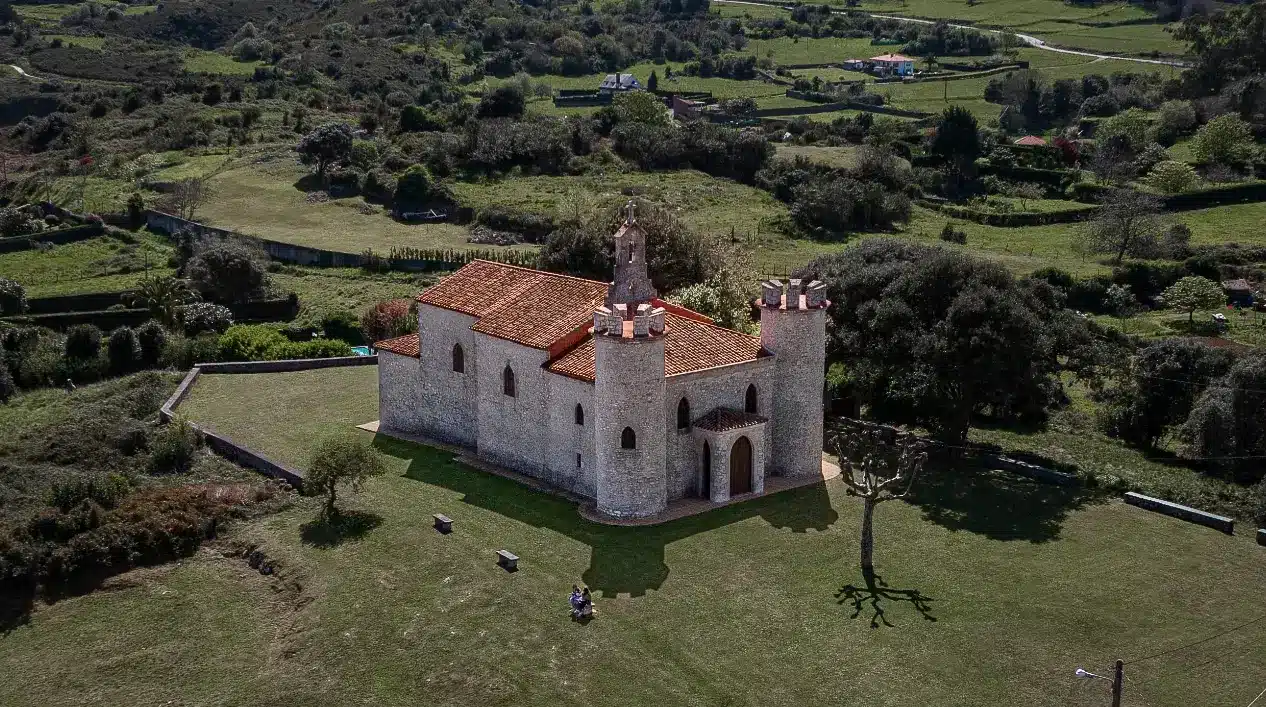
The building dates from 1515 It was built on the site of an old coastal lookout post. Legend has it that a boat of sailors from Llanes, caught in a storm, prayed for divine help. A miraculous wave deposited a floating box among the rocks of the cliff, and upon opening it, the sailors found an image of the Virgin Mary. On that very spot, they would build the sanctuary that now overlooks the sea.
It is one of the hermitages in Llanes with the greatest symbolic significance, both because of its location and its connection to the Pronouncement of the Guide and with the devotion of sailors.
Key date: el September 8, big day of La Guía.
Chapel of Saint Roch
Located in the square of the same name, the Chapel of Saint Roch It is one of the oldest surviving buildings in Llanes. This small chapel of XIV century It was originally part of an old pilgrims' hospital founded in the Middle Ages by Juan Pérez de Cué.
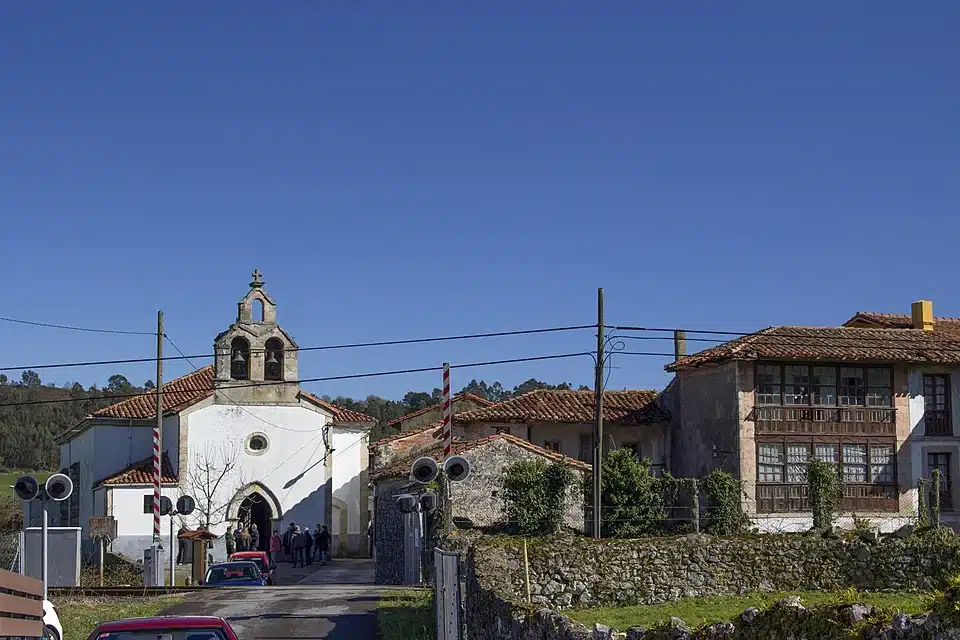
Although the hospital disappeared over the centuries, the chapel survived as a fundamental historical landmark of the Coastal Way of Saint JamesIts presence is a reminder of the importance of Llanes as a town of passage, welcome and transit for pilgrims.
Interestingly, the current statue of Saint Roch kept inside was brought expressly from Italy in 1886Today it remains one of the most beloved symbols of Proclamation of Saint Roch.
- Key date: el August 16th, XNUMX, feast of Saint Roch.
Chapel of Saint Mary Magdalene
Located in the very center of the town, the Chapel of Saint Mary Magdalene It is built on the structure of what was the original parish church of Llanes in the 13th century, before the current Basilica of Santa María del Conceyu was planned.
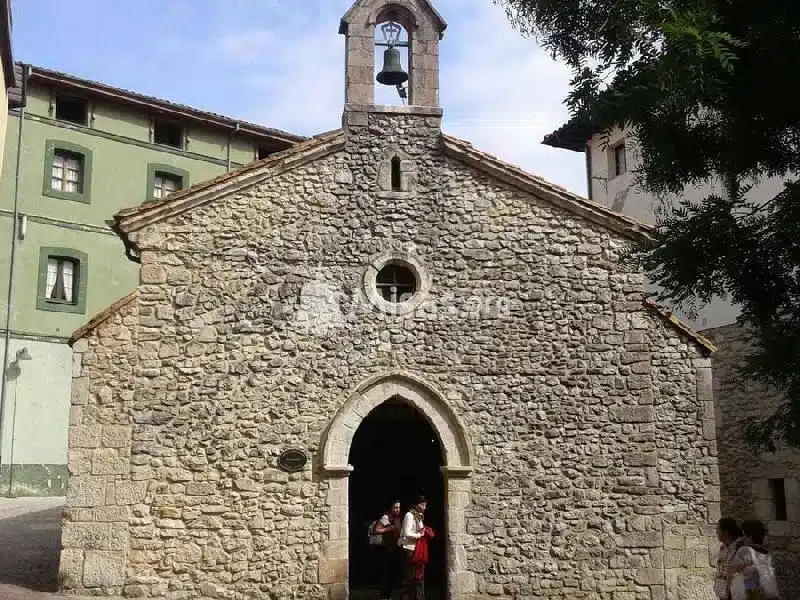
Although it has undergone significant renovations that have obscured its original Romanesque features, its small square remains one of the most charming spots in the historic center. It's one of those chapels in Llanes that should be visited at a leisurely pace, not only for its history but also for the atmosphere that surrounds it.
His connection to the Proclamation of La Magdalena This makes it an essential place to understand the traditional festivals of the town and the strong relationship between devotion, identity and popular celebration.
Key date: el July 22th, the day on which the Bando de La Magdalena celebrates its festivities.
Churches and hermitages of Llanes: a different cultural route
The churches and chapels of Llanes offer a different perspective on the region. Beyond the beaches, cliffs, and fishing villages, these temples tell the story of a land shaped by the sea, emigration, popular religiosity, the Camino de Santiago, and grand traditional festivals.
Visiting the church of Niembro, stopping before San Antolín de Bedón, discovering the hermitage of San Antonio in Nueva, entering the Chapel of Santa Ana or walking next to the chapels of Los Bandos is a way to better understand the identity of Llanes.
If you're planning a getaway and looking for things to see in Llanes with a more cultural focus, this route through the churches and hermitages of Llanes is an excellent option. It doesn't replace its beaches or natural landscapes; it complements them. Because Llanes isn't just enjoyed by the sea; it's also discovered in its stones, its legends, and those small temples that continue to hold the memory of the town.